


SOC Security Services Trends: The AI Shift Indian Enterprises Can't Ignore
Why the Role of SOC Security Services Is Evolving
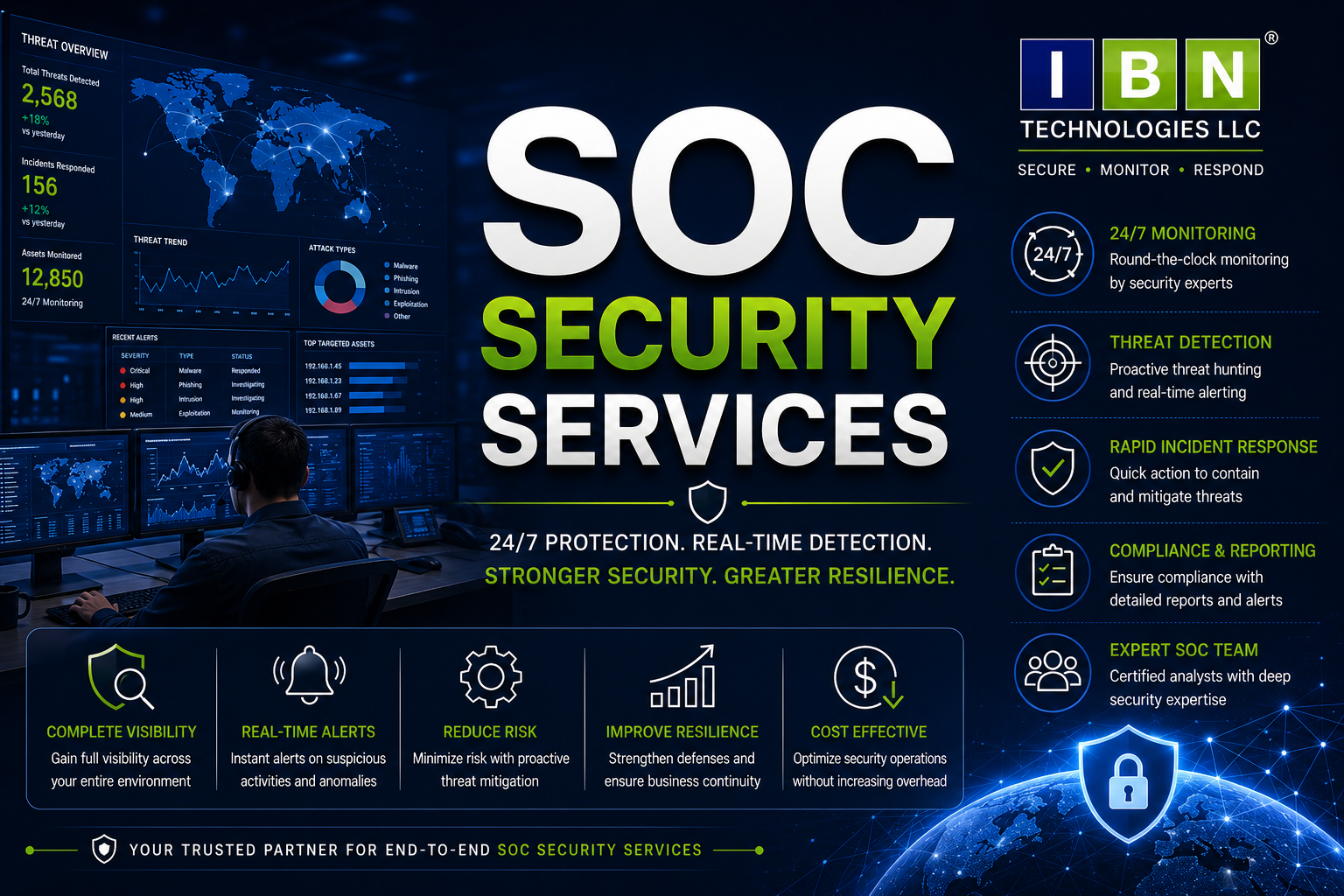
Cybersecurity threats are changing faster than most internal teams can track manually, and this shift is directly reshaping what businesses expect from SOC security services. What used to be a service built mainly around log monitoring and manual alert review is increasingly incorporating artificial intelligence and machine learning to detect patterns faster and reduce response time. For healthcare organizations managing sensitive patient data across growing digital systems, understanding this AI in SOC security services shift helps decision-makers evaluate whether a provider is genuinely keeping pace with modern threats or relying on outdated detection methods.
Why This Shift Matters Specifically for Healthcare
Healthcare environments generate enormous volumes of data across electronic health records, diagnostic systems, billing platforms, and connected medical devices. Manually reviewing this volume of activity is simply not realistic at scale, and delayed detection in healthcare settings can mean prolonged exposure of sensitive patient information. As hospitals and diagnostic providers continue digitizing operations, the ability to detect anomalies quickly across a growing, interconnected environment becomes increasingly important.
Why Manual-Only Monitoring Struggles to Keep Pace
Traditional monitoring approaches that rely heavily on manual log review or basic rule-based alerts often struggle to keep up with the sheer volume and complexity of modern healthcare IT environments. Analysts reviewing alerts manually can become overwhelmed, especially when systems generate large numbers of routine notifications alongside genuinely suspicious activity. Without automated correlation, subtle attack patterns — such as a slow, low-volume data exfiltration attempt — can go unnoticed for extended periods.
How AI Is Changing What SOC Security Services Deliver
Artificial intelligence and machine learning are increasingly used to analyze behavioral patterns across systems, flagging anomalies that deviate from typical activity far faster than manual review alone could achieve. This doesn't replace human analysts — it supports them by filtering out routine noise and surfacing genuinely suspicious patterns for expert investigation. IBN Technologies incorporates AI/ML-powered threat detection within its Managed SIEM and SOC services, combining automated behavioral analysis with continuous analyst oversight so that healthcare organizations benefit from both faster initial detection and informed human judgment during investigation and response.
Key Trends Shaping the Future of SOC Security Services
|
Trend |
What It Means for Healthcare Organizations |
|
AI-assisted behavioral analytics |
Faster identification of unusual access patterns across patient data systems |
|
Automated correlation across data sources |
Reduced manual alert review burden for internal IT teams |
|
Predictive threat intelligence integration |
Earlier awareness of emerging threat patterns relevant to healthcare targets |
|
Faster initial triage |
Analysts can focus attention on genuinely high-risk incidents sooner |
|
Continued human oversight |
AI supports, rather than replaces, expert investigation and response |
Benefits of AI-Supported SOC Security Services for Healthcare
Faster detection directly reduces the window during which patient data could be exposed if an incident occurs. It also helps healthcare IT teams manage growing data volumes without needing to proportionally increase internal staff for monitoring alone. For compliance officers, AI-assisted correlation can make it easier to identify and document unusual activity patterns that might otherwise be missed in manual reviews, supporting stronger audit readiness.
Industry Use Case: Detecting Gradual Anomalies in Access Patterns
A hospital network with multiple connected facilities needed a way to detect unusual access behavior across its electronic health record system without overwhelming its internal IT team with alert volume. By working with a provider using AI-assisted behavioral analysis as part of its SOC security services, the network was able to identify gradually escalating unusual access patterns that a purely manual review process would likely have taken much longer to notice.
Best Practices for Healthcare Organizations Adopting AI-Enabled Services
Ask providers to explain specifically how AI is used within their detection process, rather than accepting it as a generic marketing term. Confirm that AI-driven alerts are still reviewed and validated by trained analysts before action is taken. Request examples of how the provider's approach has improved detection speed or accuracy in practice. Ensure any AI-driven reporting remains understandable to compliance and administrative stakeholders, not just technical teams.
Compliance Considerations as SOC Technology Evolves
As AI becomes more integrated into SOC security services, healthcare organizations should confirm that automated detection methods still align with documentation and audit trail requirements under applicable data protection expectations. Regulators generally expect transparency into how security decisions are made, so providers should be able to explain their detection logic clearly during compliance reviews, not treat it as an unexplainable black box.
As the underlying technology behind soc security services continues to evolve, healthcare organizations that understand these trends are better positioned to choose partners who combine faster, AI-assisted detection with the human expertise needed to investigate and respond appropriately when it matters most.

 English
 Arabic
 French
 Spanish
 Portuguese
 Deutsch
 Turkish
 Dutch
Dutch
 Russian
 Romaian
 Portuguese (Brazil)
 Greek
Greek