


Protecting Patient Data Why Penetration Testing Services Are Vital for Indian Healthcare
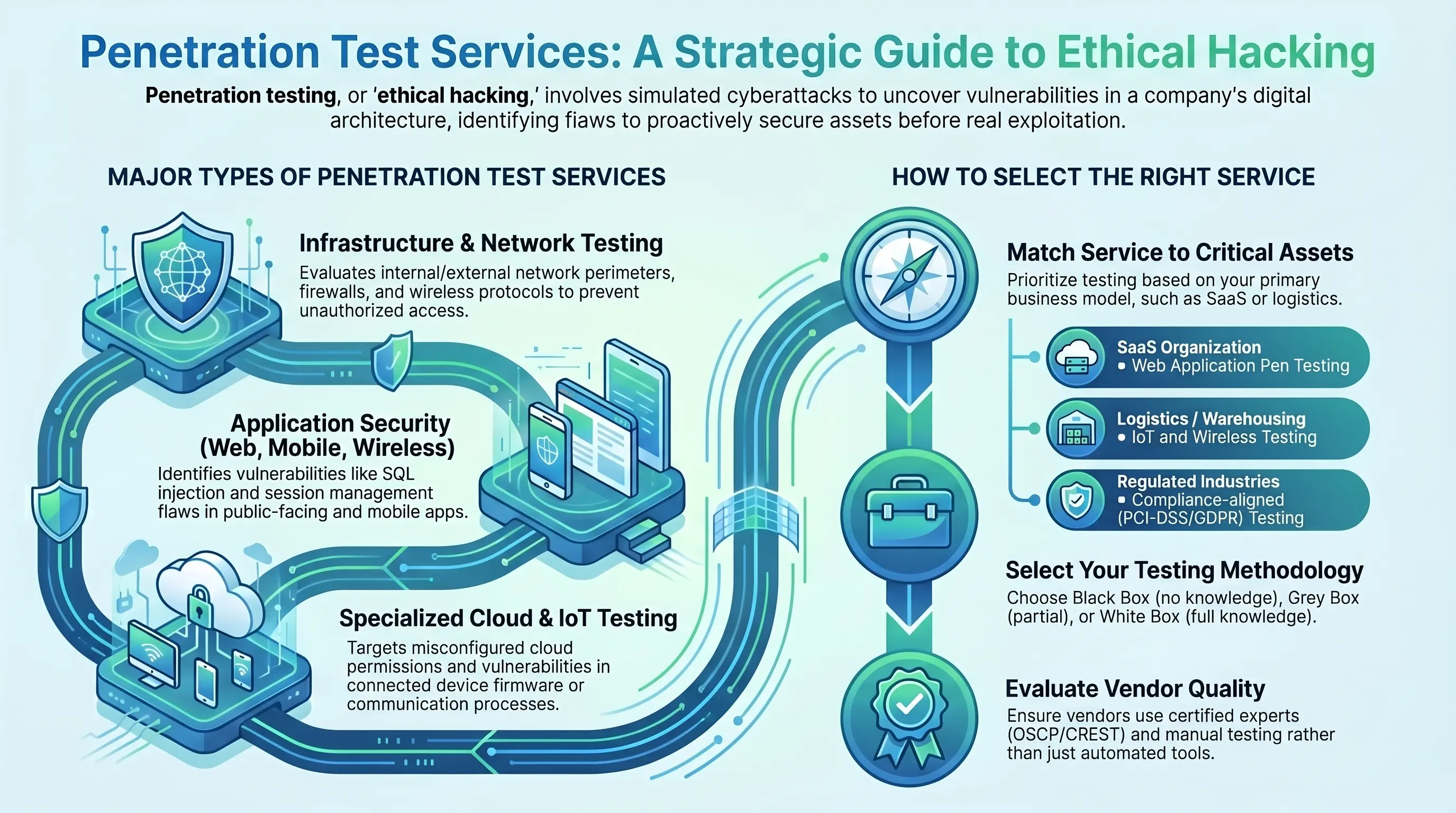
Patient Records Are Worth More to Attackers Than Most Businesses Realize
A stolen credit card number can be canceled in minutes. A stolen medical record cannot. That permanence is exactly why healthcare data commands a premium on underground markets, and why hospitals, diagnostic chains, and health-tech platforms across India have become frequent attacker targets. Penetration testing services exist to find the gaps in patient data systems before someone with bad intentions does.
Why Indian Healthcare Faces a Growing Threat Surface
The shift toward digital health records, telemedicine platforms, and connected diagnostic equipment has expanded what healthcare organizations must defend. Every patient portal, appointment-booking API, and cloud-hosted records system is a potential entry point. Layer on India's DPDP Act and international obligations like HIPAA for organizations serving overseas patients, and the pressure to prove data protection — not just claim it — has never been higher.
Why "We Have a Firewall" Isn't Enough Anymore
Healthcare IT teams often assume perimeter defenses like firewalls and antivirus tools are sufficient. They aren't. Attackers increasingly target the application layer — a patient portal login form, an insecure API used by a mobile health app, or a misconfigured cloud storage bucket holding scanned reports. These are precisely the weaknesses that structured penetration testing for healthcare data security is designed to surface, since they sit outside what traditional perimeter tools monitor.
How the Assessment Process Works for Healthcare Systems
Engagements begin with discovery and scoping that maps every system touching patient data — electronic health record platforms, patient portals, billing systems, and connected devices. Automated scanning tools identify known vulnerabilities across this environment, while manual testing by certified analysts attempts real exploitation of access controls and data handling flaws. Every finding is scored by severity and mapped against HIPAA and applicable Indian data protection requirements, with a full retest once remediation is complete to confirm the fix actually holds.
Where Healthcare Systems Are Commonly Exposed
|
System Type |
Common Weakness |
|
Patient portals |
Broken access control between patient accounts |
|
Mobile health apps |
Insecure local data storage |
|
Billing and insurance platforms |
Data exposure through unprotected APIs |
|
Cloud-hosted records |
Misconfigured storage permissions |
|
Connected medical devices |
Weak authentication, outdated firmware |
Benefits That Go Beyond Regulatory Checkboxes
Testing reduces the risk of costly data breach notifications and the reputational damage that follows when patient trust is broken. It also supports smoother due diligence when healthcare providers seek partnerships with insurers, hospital networks, or international clients who require evidence of security testing. For growing health-tech startups, a clean VAPT report can be the difference between closing an enterprise deal and losing it during technical review.
Industry Use Case
A medical practice solutions provider engaged IBN Technologies to assess its patient-facing platform ahead of a HIPAA compliance milestone. The engagement identified and validated application-layer risks, and the resulting report and remediation support helped the organization achieve HIPAA alignment while strengthening its overall security posture.
A Practical Checklist for Healthcare Security Teams
- Map every system that stores or transmits patient data, including third-party integrations
- Prioritize testing on patient portals and mobile health applications first
- Confirm findings are mapped to HIPAA and India's DPDP Act where applicable
- Require retesting to verify that patient data access flaws are actually closed
- Choose a partner with demonstrated healthcare case history, not just general IT experience
Compliance Context
IBN Technologies delivers HIPAA-aligned VAPT services alongside compliance mapping to ISO 27001, SOC 2, GDPR, and CERT-In, backed by CEH and OSCP-certified testers and a track record spanning healthcare and pharma organizations. For Indian healthcare providers, this means a testing partner who understands both the clinical data sensitivity involved and the regulatory frameworks that govern it.
When patient trust and regulatory standing are both on the line, penetration testing services give healthcare organizations in India a concrete, evidence-based way to prove their systems can withstand real-world attacks.

 English
 French
 Spanish
 Portuguese
 Deutsch
 Turkish
 Dutch
Dutch
 Italiano
 Russian
 Romaian
 Portuguese (Brazil)
 Greek
Greek