
How to Build an On-Demand Home Services App Like TaskRabbit for New York in 2026
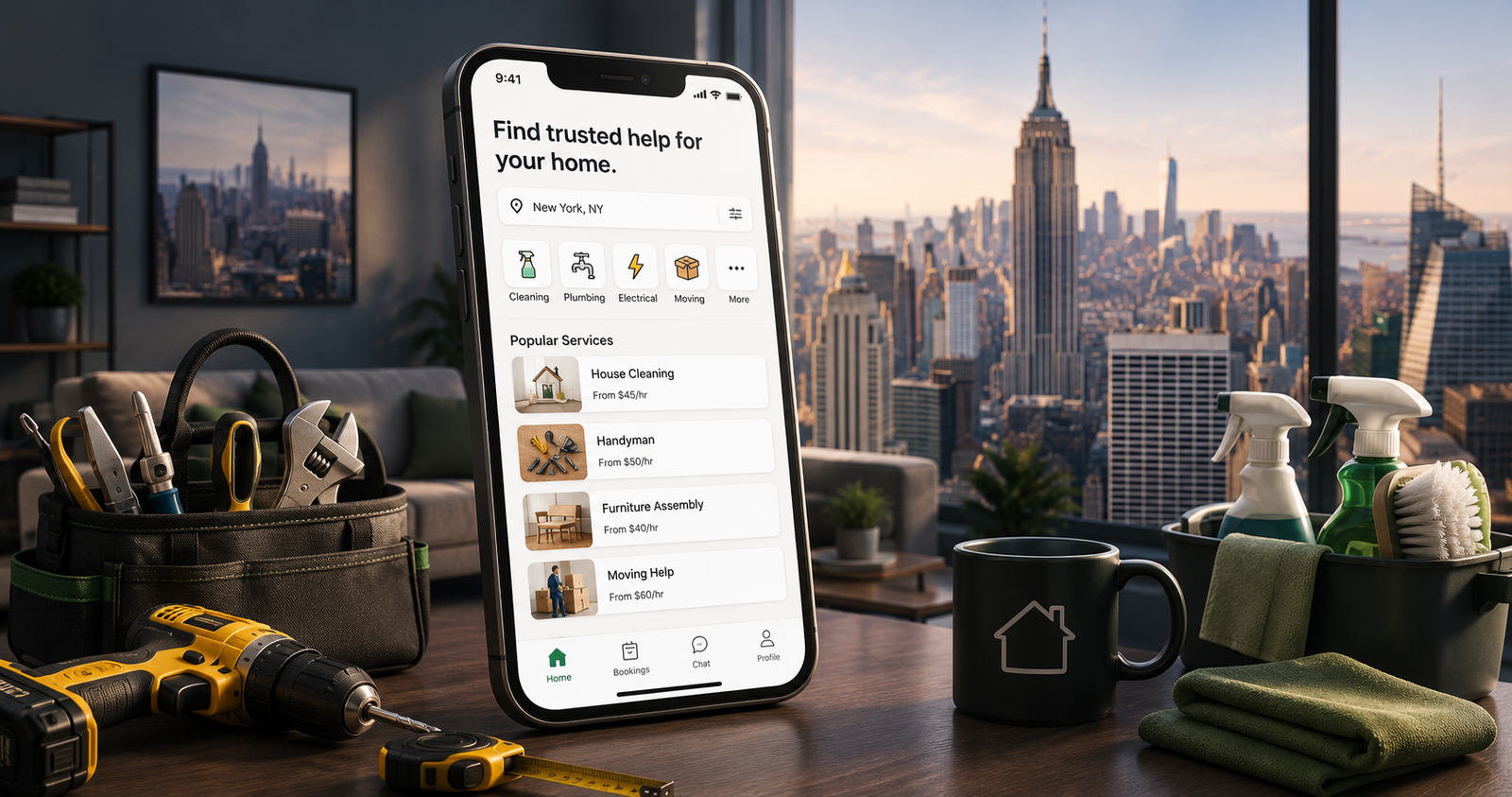
New York's home services market is one of the largest and most underserved by existing platforms in the country, with millions of residents in dense apartment buildings needing handymen, cleaners, furniture assemblers, movers, and dozens of other services on demand, which is exactly why founders with specific market insights about underserved service categories are working with a custom software development New York to build focused, vertically specialized on-demand platforms that out-serve TaskRabbit in specific niches rather than competing with it head-to-head across every category.
TaskRabbit, Handy, and Amazon Home Services have captured a meaningful share of the broad home services market, but New York's unique housing stock, building access requirements, and service provider ecosystem create real opportunities for more specialized platforms. Building superintendent coordination apps, NYC-specific furniture assembly and IKEA delivery platforms, licensed plumbing and electrical on-demand services, and bilingual service provider platforms for specific New York communities are all genuine market opportunities that existing platforms serve poorly.
This guide covers everything you need to know about building an on-demand home services marketplace for New York in 2026, the core features, the technical architecture, the development process, and the realistic budget.
Understanding the NYC Home Services Market Before Building
New York's home services market has specific characteristics that should directly shape your product decisions.
Apartment-centric demand: Unlike suburban markets, where home services often involve exterior work, lawns, and large spaces, New York's demand is overwhelmingly apartment-focused, with furniture assembly, cleaning, handyman repairs, painting, and moving in dense residential buildings with specific building access requirements (freight elevators, loading docks, building manager coordination).
Provider availability complexity: Finding and retaining qualified service providers in New York is genuinely difficult, given the competition for skilled labor and the fragmented nature of the independent contractor market. Your platform's provider acquisition and retention strategy is as important as your product.
Building access logistics: Many New York buildings require advance notice, freight elevator reservations, and building management coordination for service providers, a requirement that out-of-market platforms typically handle poorly and that a locally focused platform can build into the booking flow specifically.
Trust is the primary purchase driver: New York residents who are allowing service providers access to their apartments, valuable possessions, and personal space care deeply about provider vetting and reviews, more than price, for most service categories above the commodity level.
Licensing requirements: Many home service categories in New York require specific licensing, including electrical work, plumbing, HVAC, and your platform needs to verify and display these credentials for applicable service types.
Core Features of an On-Demand Home Services App
Customer-Side Features
Service Discovery and Booking
- Category browsing with clear service type definitions (what's included in a "standard cleaning" vs. "deep clean")
- Location-based provider availability with real-time calendar display
- NYC-specific booking details: building access instructions, freight elevator reservation needed, floor number, parking/building entry notes
- Instant booking or scheduled booking options
- Price transparency before confirmation, fixed price or estimated range, with clear methodology
Provider Profiles and Trust Signals
- Verified identity and background check status displayed prominently
- License and insurance verification for applicable service types
- Detailed review history with service-specific ratings
- Response rate and completion rate metrics
- Profile photos and brief provider background
Booking Management
- Real-time status tracking (provider en route, arrived, service in progress, completed)
- In-app messaging with the service provider
- Photo documentation of work completed
- Easy rebooking with the same provider
- Tip and payment processing at completion
Safety Features
- Provider location sharing during active service
- Emergency contact feature during active booking
- Report issue and dispute resolution workflow
Provider-Side Features
Job Discovery and Acceptance
- Service category and geographic area selection
- Job notifications with customer details, location, and scope
- Instantly accept or decline with clear response time expectations
- Earnings visibility before accepting
Schedule and Route Management
- Calendar view of accepted jobs
- NYC-optimized routing between jobs (accounting for subway vs. driving for different job types)
- Buffer time recommendations based on building access requirements
Earnings and Payment
- Weekly automatic payout via direct deposit
- Earnings dashboard with job-by-job breakdown
- Tax document generation (1099 for independent contractors)
Profile and Reputation Management
- Skills and license credential upload and verification
- Review response capability
- Performance metrics dashboard
Platform Administration
- Provider onboarding and background check workflow
- Fraud detection and suspicious activity monitoring
- Dispute resolution and customer service tools
- Dynamic pricing management by category and demand level
- Geographic expansion management
NYC-Specific Features Most Platforms Get Wrong
This is where a focused New York platform can genuinely differentiate itself from national competitors.
Building Access Coordination: A booking flow that specifically asks for and stores building access information, freight elevator booking requirements, building manager contact, loading dock location, key access or doorman instructions, and surfaces this information to providers before arrival eliminates the most common source of delayed or cancelled service appointments in New York.
Boroughs and Neighborhood Pricing: Service costs vary meaningfully across New York's boroughs; a cleaning in Tribeca versus a cleaning in Flushing involves different provider travel time, different parking situations, and different customer expectations. NYC-specific pricing logic that accounts for borough and neighborhood context serves both providers and customers more fairly than flat city-wide pricing.
Transit-Aware Provider Routing: Many New York service providers don't drive to jobs; they take the subway or bus. A routing and scheduling system that accounts for transit travel time rather than driving time produces more accurate arrival estimates and more realistic job scheduling for providers working in transit-dependent ways.
Licensed Professional Verification: New York's Department of Consumer and Worker Protection maintains license verification for many home service categories. Integration with city licensing databases for automated credential verification, rather than manual document review, is a genuine competitive advantage in a market where licensing compliance matters to customers.
Tech Stack for a NYC Home Services Marketplace
Mobile Frontend
- React Native for cross-platform iOS and Android is the right choice for a marketplace app that needs to reach both customer and provider audiences efficiently
- Real-time location tracking using device GPS, with background location permissions handled appropriately
Web Frontend
- Next.js for the web booking interface, important for customers who prefer booking from a desktop and for SEO on service category landing pages
Backend
- Node.js with Express or NestJS for API development
- PostgreSQL for relational data (users, bookings, payments, reviews)
- Redis for real-time availability and notification management
- Socket.io for real-time job status updates and in-app messaging
Key Integrations
- Stripe Connect for marketplace payments (splits payment between customer, platform fee, and provider payout)
- Twilio for SMS notifications and in-app messaging
- Google Maps Platform for provider routing and customer address validation
- Checkr or Sterling for background checks
- NYC Open Data API for license verification, where available
- SendBird or Stream for in-app chat
Infrastructure
- AWS or Google Cloud with auto-scaling for demand spike management
- Firebase for real-time location sharing during active bookings
The Development Process
Phase 1: Market Validation and Scoping (2–3 weeks): Define your specific service category focus, geographic launch area within NYC, and provider acquisition strategy before architecture decisions. The most common on-demand marketplace failure is building before validating that providers will join and customers will book.
Phase 2: UX/UI Design (4–6 weeks) Both customer and provider apps require careful user experience design — the booking flow, provider acceptance flow, real-time tracking interface, and payment completion are all high-stakes conversion moments where poor UX directly reduces transaction completion rates.
Phase 3: Core Development (14–22 weeks): Parallel development of customer app, provider app, and backend API. The most complex components, real-time location sharing, Stripe Connect marketplace payments, and the booking state machine, require senior engineering attention.
Phase 4: Provider Onboarding and Beta (4–6 weeks): Recruit and onboard initial service providers in your launch neighborhood or category before opening to customers. A marketplace with insufficient supply at launch fails regardless of product quality.
Phase 5: Soft Launch and Iteration (Ongoing) Launch in a focused geographic area with a manageable provider supply, gather real usage data, and iterate before expanding.
Realistic Cost Breakdown
| Development Scope | Estimated Cost | Timeline |
|---|---|---|
| MVP (single category, limited geography) | $65,000 – $130,000 | 18–26 weeks |
| Full Platform (multi-category, all NYC) | $130,000 – $300,000 | 28–42 weeks |
| Enterprise Scale (advanced matching, AI pricing) | $300,000 – $600,000+ | 42+ weeks |
FAQ: NYC On-Demand App Founders Ask
Q1. How do I compete with TaskRabbit and Handy in New York?
Not by trying to serve every category across the entire city, but by going deeper in a specific service category or community that national platforms serve poorly. NYC-specific examples: a platform focused exclusively on licensed handymen for NYC apartment repairs (with building access workflow built in), or a bilingual platform serving Spanish-speaking service providers and customers in specific boroughs where national platforms have poor provider supply.
Q2. How do I solve the provider supply problem at launch?
Launch in one neighborhood or with one service category where you can personally recruit 15–20 quality providers before opening to customers. Provider quality and reliability in the first 90 days determine your review trajectory; the review foundation you build early is nearly impossible to reverse.
Q3. How should I price the platform's take rate?
TaskRabbit charges 15% to taskers plus a service fee to customers. Handy charges providers 15–25%. A new platform entering the market with a lower take rate (10–12%) during the launch period is a meaningful provider acquisition tool. Providers who leave TaskRabbit for better economics and stay for a better platform experience become your best word-of-mouth acquisition channel.
Q4. What insurance requirements do I need to address for my platform?
Consult with a lawyer specializing in marketplace platforms and gig economy businesses, New York's independent contractor rules, insurance requirements for different service categories, and platform liability exposure all require specific legal advice rather than general guidance.
Q5. What's the single most important feature for early retention? Easy rebooking with the same provider, customers who find a reliable, trustworthy service provider in New York become deeply loyal to any platform that makes rebooking that specific provider effortless. This feature drives retention more effectively than any loyalty program or discount structure.
The Bottom Line
New York's on-demand home services market has genuine gaps that focused, locally built platforms can fill better than national competitors, particularly in specific service categories, underserved communities, and the NYC-specific logistics challenges that out-of-market platforms consistently handle poorly. Building a well-focused on-demand home services app for New York in 2026 requires a custom software development New York that understands both two-sided marketplace architecture and the specific operational realities of providing home services in one of the most complex urban environments in the world.
Категории
Больше
Global Micro Bubble Exhaust Valves market size was valued at USD 849 million in 2025. The market is projected to grow from USD 849 million in 2025 to USD 1,254 million by 2034, exhibiting a CAGR of 5.9 % during the forecast period. Micro Bubble Exhaust Valve is a device specially designed to effectively remove tiny bubbles and free gases from the fluid system. Its core working principle relies...

According to a new report from Intel Market Research, the global Agricultural Pest Monitoring Equipment market was valued at USD 2,207 million in 2025 and is projected to reach USD 3,894 million by 2034, growing at a robust CAGR of 8.7% during the forecast period (2025–2034). This growth is propelled by the rising adoption of precision agriculture technologies, increasing demand for...
According to a new report from Intel Market Research, the global Mixed Potato Puree Market was valued at USD 1.2 billion in 2024 and is projected to grow from USD 1.25 billion in 2025 to USD 1.8 billion by 2034, exhibiting a steady CAGR of 4.5% during the forecast period. Growth is driven by rising consumer preference for quick and nutritious meal solutions, expansion in the foodservice sector...
The Essentials Hoodie has become one of the most popular clothing choices for people who value comfort, simplicity, and modern fashion. Its clean design makes it suitable for daily wear while offering enough style to create fashionable outfits for every season. Whether you are heading to work, meeting friends, traveling, or relaxing Essentials Hoodie at home, this hoodie delivers reliable...

According to a new report from Intel Market Research, the global 3D Stacked DIMM Market was valued at USD 1.38 billion in 2024 and is projected to grow from USD 1.54 billion in 2025 to USD 2.30 billion by 2032, exhibiting a robust CAGR of 8.4% during the forecast period. Growth is driven by escalating demand from hyperscale data centers and AI infrastructure, where memory bandwidth directly...