


Steam Turbine Industry In India: Why Reliability Still Beats Price in Industrial Procurement Decisions
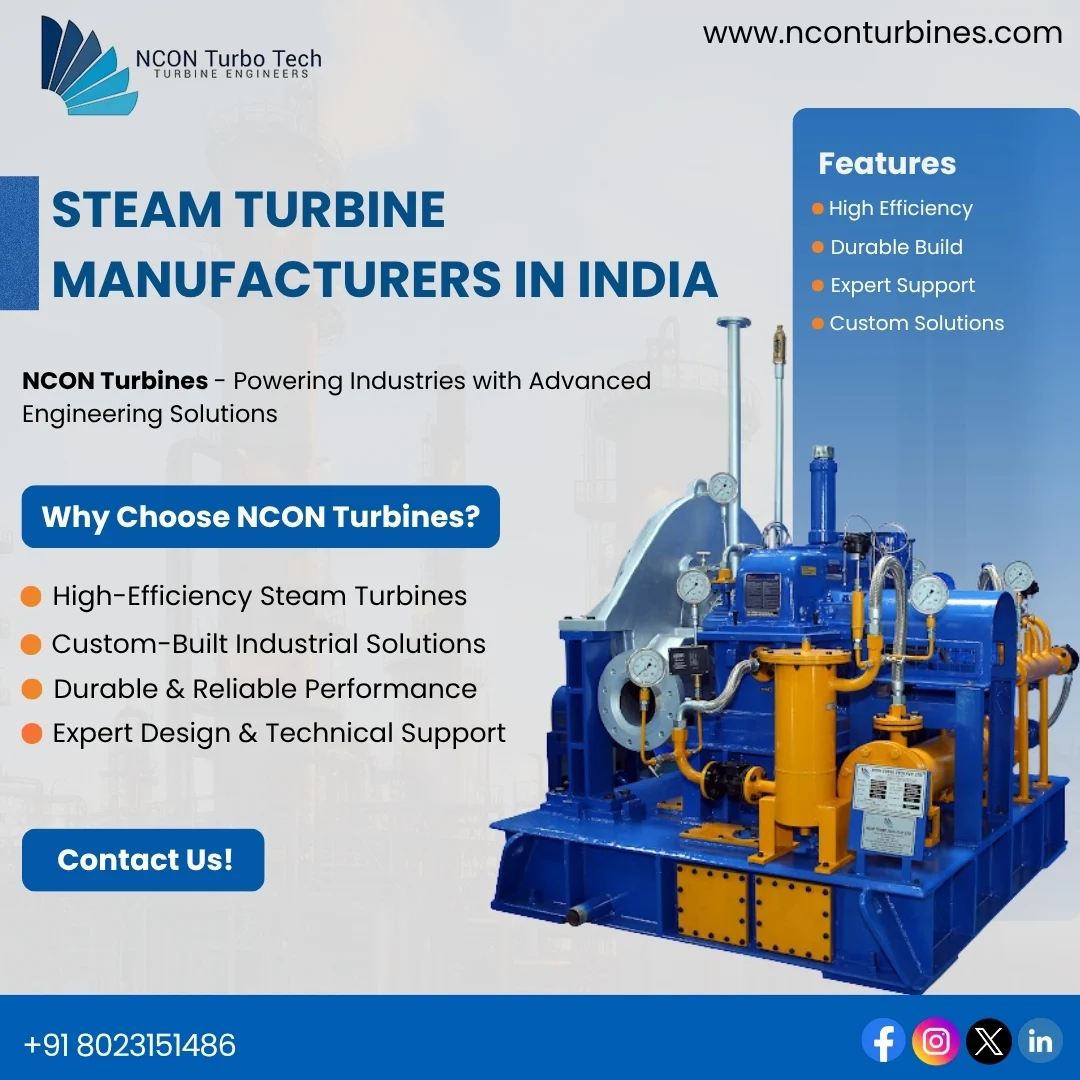
For decades, procurement conversations in heavy manufacturing followed a predictable script: compare quotes, pick the lowest number, move on. That script has quietly broken down. Across the steam turbine industry in India, plant managers, EPC contractors, and process engineers are now asking a different first question — not "what does it cost," but "how long will it run without failing us."
This shift didn't happen overnight. It's the product of hard lessons learned on factory floors, in captive power plants, and inside sugar mills and textile units where an unplanned turbine outage can halt production for days. Understanding why reliability has overtaken price as the deciding factor requires looking at how the industry actually operates on the ground — not just what the brochures say.
The Real Cost of a Cheap Turbine
Steam turbines are not commodity equipment. They sit at the center of a plant's energy economics, converting steam into mechanical or electrical power that keeps the rest of the operation running. When a turbine underperforms or fails prematurely, the damage rarely stays contained to the turbine itself.
Consider what a breakdown actually triggers:
-
Production lines dependent on captive power lose output for every hour the unit is down
-
Emergency repairs cost significantly more than planned maintenance, often requiring expedited parts and specialist labor
-
Backup power sourcing, where available, adds direct operating expense that wasn't budgeted
-
Repeated failures erode confidence in the entire power generation setup, forcing premature capital replacement
This is the calculation that has pushed buyers across the steam turbine industry in India to weigh total lifecycle cost rather than sticker price alone. A turbine priced 15% lower but requiring major overhaul within five years is not actually the cheaper option — it's a deferred expense with interest attached.
Experience: What Three Decades on the Factory Floor Actually Teaches
There's a difference between reading a turbine specification sheet and having watched hundreds of units perform across real operating conditions — variable steam quality, inconsistent load demand, tropical humidity, and the wear patterns that only show up after years of continuous duty.
NCON Turbines has spent more than 30 years manufacturing steam turbines from its Rajajinagar facility in Bangalore, working across sectors including sugar processing, textiles, chemical processing, and independent power production. That kind of tenure isn't a marketing line — it's the accumulated record of design adjustments made after seeing how turbines actually behave once they leave the factory floor and enter demanding industrial service.
This experience shapes decisions that specification sheets alone can't capture: blade material selection for steam conditions specific to a region, bearing tolerances suited to Indian ambient temperatures, and casing designs that account for the maintenance access realities of a typical Indian industrial plant, where downtime windows are often tighter than international benchmarks assume.
Expertise: Matching Turbine Architecture to Operating Reality
Not every industrial site needs the same turbine architecture, and this is where genuine engineering expertise separates serious manufacturers from assemblers of imported components.
-
Low-pressure applications, common in smaller captive power setups and process industries with modest steam availability, call for compact, cost-efficient designs. Facilities exploring this category typically look toward low pressure steam turbine manufacturers who understand the specific efficiency trade-offs at this scale.
-
Saturated steam conditions, frequent in sugar mills and certain process industries, demand turbines engineered for moisture-heavy steam without accelerated blade erosion. This is a specialized design challenge that separates experienced saturated steam turbine manufacturers from generalist fabricators.
-
Higher-capacity, multi-stage requirements, typical of larger power generation and heavy process plants, need turbines built for sustained efficiency across variable loads. Buyers researching this category often compare providers of Multi-Stage Steam Turbines India based on documented performance history rather than catalog claims alone.
Matching the right architecture to the right application isn't a sales exercise — it's an engineering judgment call that determines whether a plant gets 10 years of reliable service or a string of maintenance headaches.
Trust Signals: What Buyers Are Actually Verifying Before Purchase
Procurement teams evaluating turbine manufacturers in 2026 have become considerably more diligent than they were even five years ago. The due diligence process now commonly includes:
-
Site visits to manufacturing facilities to inspect fabrication quality directly
-
Reference checks with existing clients operating similar turbine configurations
-
Verification of after-sales support responsiveness, particularly for spare parts availability
-
Review of documented operating hours across the manufacturer's installed base
-
Confirmation of in-house design capability versus outsourced or licensed manufacturing
This heightened scrutiny reflects a market that has been burned before by manufacturers who prioritized volume over long-term accountability. Long-standing operational history at a fixed manufacturing address, transparent service infrastructure, and a demonstrable ability to support installed turbines years after commissioning have become the baseline trust signals that serious buyers now expect as standard, not bonus criteria.
For plants comparing low-pressure options specifically, many buyers evaluating low pressure steam turbine manufacturers also weigh how long the manufacturer has maintained a consistent operating address and service history in the region.
Service Integration: Why Turbine Support Doesn't End at Commissioning
A turbine's real value is proven over its operating lifetime, not on the day it's installed. This is where many buyers discover the gap between manufacturers who treat a sale as a transaction and those who treat it as the start of an ongoing operational relationship.
Spare parts availability is often the first test. Older units, particularly those approaching a decade or more of service, require access to compatible components without long lead times that force extended shutdowns. Equally important is access to qualified service support for scheduled overhauls, vibration analysis, and efficiency audits that extend a turbine's useful life well beyond its original design horizon.
Plants that have run into difficulty sourcing support for aging units increasingly prioritize manufacturers who maintain dedicated service infrastructure. This is a growing area of demand across the industry, with facilities searching for dependable Turbine spares & services India support specifically because they've experienced the operational cost of not having it in the past.
Sugar mills and process plants running saturated-steam configurations face a similar calculation, which is why many return to the same saturated steam turbine manufacturers they originally purchased from rather than sourcing parts through third parties.
Industry Perspective: Where the Market Is Heading
Several converging pressures are reshaping expectations across India's turbine manufacturing landscape heading into the second half of 2026.
Energy efficiency mandates are tightening across industrial sectors, pushing plant operators to look more closely at turbine performance data rather than accepting manufacturer claims at face value. Export demand is also rising, with global buyers in Southeast Asia, Africa, and the Middle East increasingly sourcing Indian-manufactured turbines for cost-competitive, reliable power generation equipment — a trend that has placed additional emphasis on manufacturers who can demonstrate consistent quality across larger production volumes.
At the same time, domestic industrial expansion, particularly in process manufacturing and captive power generation, continues to sustain steady demand for both entry-level and higher-capacity turbine configurations. Manufacturers who can serve this full spectrum, from smaller low-pressure units to complex Multi-Stage Steam Turbines India systems, are increasingly favored by buyers who prefer a single accountable vendor relationship over managing multiple suppliers.
Operational Impact: What This Means for Plant Decision-Makers Today
For engineers and procurement teams currently evaluating turbine suppliers, the practical implication is straightforward: due diligence on manufacturing history, service capability, and documented reliability now carries more weight in the decision process than the initial quote. A turbine purchase is a multi-decade commitment to a piece of equipment that will directly determine plant uptime, and increasingly, buyers are structuring their evaluation criteria to reflect that reality rather than treating it as a one-time capital expense comparison.
People also ask
What factors matter most when selecting a steam turbine manufacturer in India?
Documented operating history, manufacturing experience across varied industrial applications, transparent after-sales service, and spare parts availability tend to matter more long-term than initial purchase price alone.
Why is saturated steam turbine design considered more specialized?
Saturated steam contains higher moisture content, which accelerates blade erosion if the turbine isn't specifically engineered to handle it, making this a design area where manufacturing experience directly affects equipment lifespan.
How does turbine selection differ between low-pressure and multi-stage applications?
Low-pressure turbines suit smaller-scale or budget-conscious captive power setups, while multi-stage turbines are designed for larger capacity and more complex load requirements, typically found in bigger industrial or power generation facilities.
Why has spare parts and service support become a bigger factor in turbine procurement?
As installed turbines age, facilities without reliable access to service support face extended downtime during repairs, making ongoing manufacturer accountability a critical part of the total ownership experience.
Is India's steam turbine manufacturing sector competitive globally?
Growing export demand from regions including Southeast Asia, Africa, and the Middle East suggests Indian manufacturers are increasingly viewed as cost-competitive and reliable options in the global turbine supply chain.
Contact us
Website: https://www.nconturbines.com/
Mail : enquiry@nconturbines.com
Services Quick Links:
Low-Cost Steam Turbines | Single-Stage Steam Turbines | Multi-Stage Steam Turbines | Parts and Services
Social Media:
Facebook | Instagram | Pinterest | YouTube | LinkedIn
Categorie
Leggi tutto
La tecnología de depilación láser ha evolucionado significativamente en los últimos años, ofreciendo soluciones más rápidas, seguras y eficaces. Una maquina laser diodo es una de las opciones más recomendadas para quienes desean eliminar el vello de forma prolongada, ya sea en un centro de estética o desde la comodidad del hogar....
Expert Review • July 2026 tangma2088 & qiqiyg In-Depth Review: The Definitive Guide to Premium Luxury Alternatives By Luxury Authentication & Review Desk • 12 min read • Updated July 8, 2026 1. Introduction: Why We Conducted This Review The luxury Official market has undergone a seismic transformation over the past three years. What was once a landscape dominated by...

随着全球贸易持续扩展,企业越来越需要高效、安全且灵活的支付体系来满足国际客户需求。不同国家的支付偏好、货币种类以及监管要求,使跨境收款变得更加复杂。通过采用先进的支付技术,企业不仅能够提高交易成功率,还能优化资金流转效率,降低运营成本,并为全球客户提供更加流畅的支付体验,从而增强市场竞争力并支持长期业务增长。 数字支付推动跨境交易升级 企业在拓展国际市场时,往往会面临支付方式分散、结算周期较长以及支付失败率较高等问题。部署数字支付解决方案能够整合多种支付渠道,实现自动化支付处理,并支持实时交易监控。与此同时,该方案还能帮助企业减少人工操作,提高支付准确率,并优化客户结账流程,让消费者在不同地区都能获得一致且便捷的支付体验,为企业建立更加稳定高效的跨境交易体系。 打造覆盖全球市场的支付能力...

According to a new report from Intel Market Research, the Europe Physical Identity and Access Management (PIAM) Software Market was valued at USD 345.6 million in 2024 and is projected to grow from USD 375.5 million in 2025 to USD 567.8 million by 2030, exhibiting a robust CAGR of 8.6% during the forecast period. Growth is driven by stringent regulatory compliance requirements such as GDPR,...
Hiking through Colorado’s mountain landscapes can be one of the most rewarding parts of a company retreat. Scenic trails, fresh air, and shared physical challenges give employees a chance to step away from routine work and connect in a more natural setting. However, successful outdoor adventure team building requires more than choosing a beautiful trail. Colorado’s altitude,...
