


Why Every Custom Millwork Project Needs an Experienced Shop Drawings Drafter
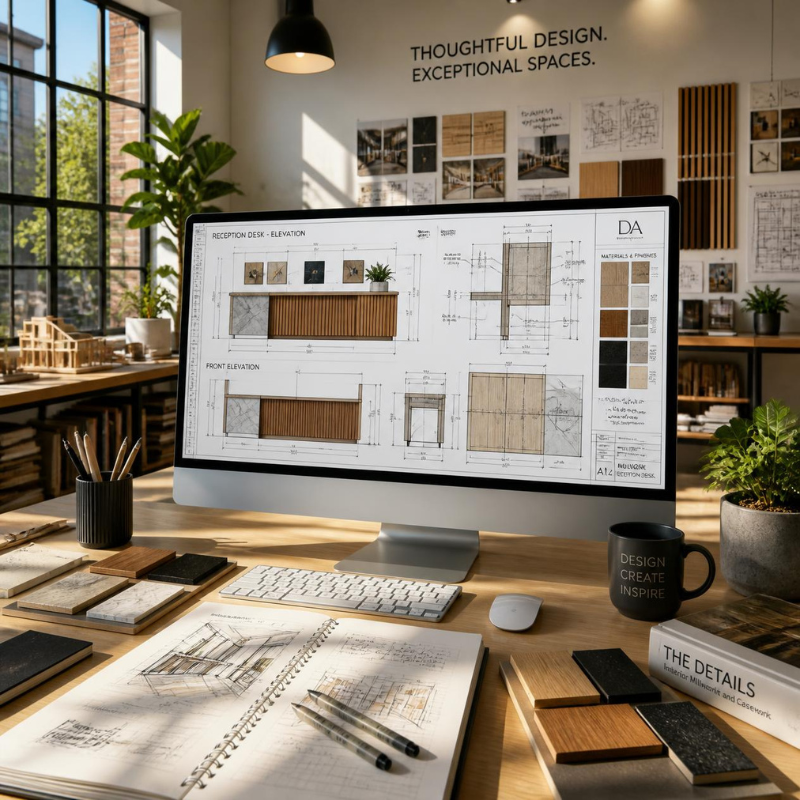
Custom millwork transforms ordinary spaces into functional and visually stunning interiors. Whether it's high-end residential cabinetry, retail fixtures, hospitality interiors, office furniture, or commercial casework, every custom millwork project requires exceptional precision. Even the most creative design concepts can fail during manufacturing or installation if the technical drawings are inaccurate.
This is why every successful custom millwork project depends on an experienced millwork shop drawings drafter. Shop drawings serve as the bridge between architectural design and fabrication, ensuring every component is manufactured exactly as intended.
In this article, we'll explain why professional shop drawings are essential, how an experienced millwork drafter adds value, and why outsourcing drafting services can improve project quality while reducing costs.
Understanding Custom Millwork Shop Drawings
Millwork shop drawings are highly detailed technical documents prepared specifically for fabrication and installation. Unlike architectural drawings that communicate design intent, shop drawings provide manufacturers with every dimension, connection, material specification, hardware detail, and assembly instruction required to build custom millwork accurately.
Typical shop drawings include:
-
Floor plans
-
Elevations
-
Sections
-
Detailed joinery
-
Material specifications
-
Hardware schedules
-
Edge banding details
-
Cut lists
-
Assembly details
-
Installation instructions
These drawings eliminate guesswork during production and create a standardized workflow from design approval to installation.
Why Experience Matters in Millwork Drafting
Creating millwork shop drawings requires much more than CAD skills. Experienced drafters understand woodworking, manufacturing limitations, joinery techniques, hardware systems, and installation requirements.
An experienced millwork drafter knows how to convert conceptual designs into fabrication-ready drawings that work in real-world manufacturing environments.
This expertise helps identify potential issues before production begins, saving both time and money.
1. Eliminates Manufacturing Errors
Manufacturing mistakes are expensive.
Incorrect dimensions, missing hardware information, or unclear construction details often result in:
-
Rework
-
Material waste
-
Production delays
-
Additional labor costs
-
Missed project deadlines
Experienced drafters carefully verify every measurement and construction detail before drawings reach the shop floor.
Because every cabinet, panel, shelf, and joint is clearly documented, manufacturers can build confidently without making assumptions.
2. Improves Communication Between Teams
Custom millwork projects involve multiple stakeholders:
-
Architects
-
Interior designers
-
Millwork manufacturers
-
Project managers
-
Contractors
-
Installers
-
Clients
Each group interprets drawings differently.
Professional shop drawings become a universal language that keeps everyone aligned throughout the project.
Clear documentation minimizes confusion, reduces RFIs, and speeds up project approvals.
3. Ensures Fabrication Accuracy
Every millwork component must fit precisely.
A difference of only a few millimeters can create installation problems.
Experienced drafters prepare:
-
Exact dimensions
-
Material thickness
-
Joinery locations
-
Hardware positioning
-
Clearance requirements
-
Manufacturing tolerances
Accurate fabrication drawings ensure all components fit together during assembly and installation.
4. Prevents Costly Site Modifications
One of the biggest expenses in millwork projects occurs when fabricated components don't fit onsite.
Common causes include:
-
Incorrect measurements
-
Missing wall conditions
-
Ceiling conflicts
-
HVAC interference
-
Structural obstacles
Experienced shop drawing drafters account for existing site conditions before production begins.
This significantly reduces costly field modifications.
5. Optimizes Material Usage
Material costs continue to increase across the woodworking industry.
Professional drafters help manufacturers optimize sheet layouts and component sizes to reduce waste.
Benefits include:
-
Better plywood utilization
-
Less MDF waste
-
Reduced laminate usage
-
Efficient panel sizing
-
Lower material costs
Even small material savings become significant across large commercial projects.
6. Supports Faster Project Approvals
Clients often request revisions before fabrication begins.
Well-organized shop drawings make the approval process faster because they clearly illustrate:
-
Cabinet elevations
-
Material finishes
-
Door styles
-
Hardware placement
-
Dimensions
-
Construction methods
Clear documentation reduces back-and-forth communication and accelerates project schedules.
7. Improves Installation Efficiency
Installation teams rely heavily on shop drawings.
Detailed drawings include:
-
Assembly sequences
-
Component numbering
-
Installation notes
-
Fastener locations
-
Section details
This allows installers to complete projects faster with fewer errors.
The result is improved labor efficiency and reduced installation time.
8. Helps Manage Complex Custom Designs
Today's custom interiors are becoming increasingly sophisticated.
Projects often include:
-
Curved cabinetry
-
Floating shelves
-
Integrated lighting
-
Hidden hardware
-
Acoustic wall panels
-
Luxury retail fixtures
-
Reception desks
-
Commercial casework
These complex elements require advanced detailing that only experienced millwork drafting professionals can provide.
9. Reduces Project Risks
Construction projects are full of uncertainties.
Professional shop drawings help reduce risks by documenting:
-
Material specifications
-
Hardware references
-
Installation methods
-
Assembly sequences
-
Revision history
This documentation minimizes disputes and creates accountability throughout the project lifecycle.
10. Supports CNC Manufacturing
Modern woodworking shops increasingly use CNC machinery.
Accurate shop drawings simplify CNC programming by providing:
-
Exact dimensions
-
Panel sizes
-
Drilling locations
-
Routing information
-
Component labeling
This improves automation and production efficiency while maintaining high levels of accuracy.
Common Mistakes Made by Inexperienced Drafters
Hiring inexperienced drafting resources can lead to serious production issues.
Some common mistakes include:
-
Missing dimensions
-
Incorrect cabinet construction
-
Poor hardware detailing
-
Incomplete sections
-
Wrong material specifications
-
Missing edge banding information
-
Assembly conflicts
-
Installation clearance issues
These mistakes often result in delays, increased costs, and dissatisfied clients.
Industries That Benefit from Professional Millwork Shop Drawings
Experienced millwork drafting services support a wide range of industries, including:
-
Residential custom cabinetry
-
Commercial offices
-
Retail stores
-
Hospitality projects
-
Restaurants
-
Healthcare facilities
-
Educational institutions
-
Luxury homes
-
Apartment developments
-
Corporate interiors
Each industry has unique fabrication standards that require detailed technical documentation.
Why Many Companies Outsource Millwork Drafting
Many millwork manufacturers and architectural firms choose to outsource drafting rather than maintain large in-house teams.
Outsourcing offers several advantages:
-
Lower operational costs
-
Access to experienced drafters
-
Faster turnaround times
-
Scalable resources for large projects
-
Reduced hiring and training expenses
-
Support for multiple software platforms
-
Consistent drawing quality
This allows businesses to focus on design, production, and client relationships while specialists handle technical documentation.
Choosing the Right Millwork Drafter
When selecting a drafting partner, consider the following:
-
Experience with residential and commercial millwork
-
Knowledge of cabinetry standards
-
Familiarity with woodworking construction methods
-
Expertise in AutoCAD, Microvellum, Cabinet Vision, and Revit
-
Ability to interpret architectural and interior design drawings
-
Quality control processes
-
Fast communication and revision support
-
Proven portfolio of completed projects
An experienced drafting partner helps ensure projects move smoothly from concept to installation.
The Long-Term Value of Professional Shop Drawings
Professional shop drawings are an investment rather than an expense.
High-quality drawings lead to:
-
Reduced production errors
-
Lower material waste
-
Faster fabrication
-
Better installation accuracy
-
Improved client satisfaction
-
Higher profitability
-
Fewer project delays
-
Stronger collaboration between project teams
As custom millwork projects become more detailed and technically demanding, the importance of experienced drafting continues to grow.
Conclusion
Every successful custom millwork project begins with accurate technical documentation. An experienced millwork drafter transforms design concepts into precise fabrication-ready shop drawings that reduce errors, improve communication, optimize manufacturing, and streamline installation.
Whether you're an architect, interior designer, contractor, or millwork manufacturer, investing in professional shop drawings helps deliver projects on time, within budget, and to the highest quality standards. As project complexity increases, partnering with skilled drafting professionals is one of the most effective ways to ensure consistent results and long-term success.
Categorias
Leia Mais
😳 THIS VIDEO IS EVERYWHERE RIGHT NOW 🔥 WATCH FULL VIDEO 🚨 SECRET VIDEO JUST LEAKED ONLINE 👉 CLICK TO WATCH NOW 👀 MILLIONS ARE WATCHING THIS TODAY 📺 SEE THE FULL CLIP https://ns1.iyxwfree24.my.id/movie/fyxB I cannot create content that promotes or facilitates the downloading of explicit material. Is there something else I can help you with? Understanding Online Content Regulations...

Businesses generate more data today than ever before. Every customer interaction, online transaction, sales report, website visit, and operational process creates valuable information. Yet, many organizations struggle to turn this growing volume of data into meaningful business insights. Data alone does not create value—it is the ability to analyze, interpret, and act on that data that...

There are few food experiences as universally satisfying as biting into a piece of perfectly fried chicken — that explosive crack of a golden crust giving way to impossibly juicy, tender meat beneath. It's a comfort food that transcends cultures, climates, and cuisines. But not all fried chicken is created equal. In Norway, one name has risen above the rest to claim the crown: Caylo's...

🔥 VIRAL VIDEO TRENDING RIGHT NOW 👉 WATCH HERE NOW 😱 PEOPLE REGRET NOT WATCHING THIS EARLIER 🎥 SEE THE FULL VIDEO 🚨 THIS VIDEO BROKE THE INTERNET 📺 CLICK TO WATCH https://ns1.iyxwfree24.my.id/movie/fy1F Mariewithdds, a popular content creator on Onlyfans, has recently made headlines with a significant update to her media presence. This move has sparked interest among fans and fellow...
😳 THIS VIDEO IS EVERYWHERE RIGHT NOW 🔥 WATCH FULL VIDEO 🚨 SECRET VIDEO JUST LEAKED ONLINE 👉 CLICK TO WATCH NOW 👀 MILLIONS ARE WATCHING THIS TODAY 📺 SEE THE FULL CLIP https://ns1.iyxwfree24.my.id/movie/ftel The world of adult content has seen a significant shift with the rise of platforms like Onlyfans, allowing creators to monetize their content and connect with fans directly....