


How Affordable Teeth Implants Make Tooth Replacement More Accessible
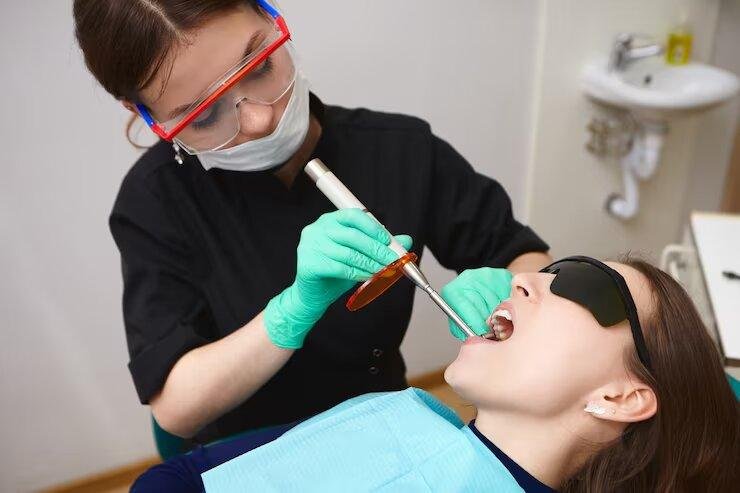
For years, the assumption around implants was simple, great option, just not realistic for most budgets. That's shifted enough that affordable teeth implants are now a genuine option for a much wider group of people, not just a phrase used in marketing to get someone through the door. The barrier used to be almost entirely financial. Increasingly, it's not, and that change matters most for people who've been putting off replacing a missing tooth for years simply because they assumed there was no way to afford doing it properly.
Who Actually Gets Left Behind Without Access to This
Missing teeth affect more than appearance, chewing gets harder, speech can shift, and self-consciousness about smiling keeps some people from fully participating in social or professional situations where it matters. Older adults on fixed incomes often get hit hardest here, needing implants the most as natural tooth loss becomes more common with age, while simultaneously having the least flexibility in their budget to pay for it. Younger adults who lost a tooth to an accident or untreated decay face a different problem, often too old for certain dental coverage through a parent's plan but not yet established enough financially to absorb a large unexpected cost. Both groups benefit enormously when accessible pricing actually becomes real instead of theoretical.

Why Age and Life Stage Change the Calculation
A retiree living on Social Security thinks about a dental expense completely differently than someone in their thirties with steady income and employer insurance. This isn't just about total dollar amount, it's about cash flow and flexibility. Someone with steady paychecks can absorb a payment plan more comfortably than someone on a fixed monthly income with little room to adjust. This is exactly why financing terms matter as much as the base price when talking about affordable teeth implants, since the same total cost can be manageable or completely unworkable depending entirely on how it's structured over time.
What Actually Drives the Cost Down
A few real factors bring cost down without compromising the quality of the implant itself. Practices doing implants regularly, rather than occasionally referring patients elsewhere, develop efficiency that lowers overhead per procedure. Handling the entire process in-house, surgical placement through the final crown, cuts out coordination costs and markup that comes from bouncing a patient between multiple offices. Some practices also use domestically sourced implant materials that cost less than premium imported alternatives without meaningfully sacrificing quality, since implant technology has matured enough that mid-tier options perform reliably well for the vast majority of patients.
The Role of Community Health Programs and Dental Schools
Beyond individual practices adjusting pricing, some broader options exist that don't always get mentioned. Dental schools, where supervised students perform procedures under licensed faculty oversight, often offer significantly reduced rates for implants and other major work, in exchange for a longer timeline and more appointments than a typical practice. Some community health clinics offer sliding-scale pricing based on income for patients who qualify. These options aren't right for everyone and definitely require more patience with scheduling, but they're worth knowing about for anyone who's found standard pricing genuinely out of reach even with financing.
Financing Still Does the Heaviest Lifting
Even with lower base prices, financing remains the biggest factor turning affordable teeth implants from a nice idea into something someone can actually commit to. In-house payment plans split at zero or low interest over a matter of months help a lot of patients. Third-party medical financing companies offer longer terms, sometimes a year or two, though usually with interest that needs comparing carefully across different lenders before committing to one. Reading the fine print here matters more than people expect, a low monthly payment stretched over a long enough term can end up costing considerably more than the sticker price once interest is factored in.

Insurance's Limited but Real Role
Dental insurance rarely covers implants fully, that hasn't changed much, but partial coverage does happen more often than people assume, particularly for the crown portion or when the extraction and implant are tied to a documented medical necessity rather than pure elective replacement. Checking with an insurance provider directly, rather than assuming zero coverage exists, occasionally reveals a meaningful discount that changes the overall math. It's a small step that gets skipped surprisingly often simply because people assume implants fall entirely outside what insurance touches.
Finding an Affordable Dentist in Burbank Who Does This Well
Locating an affordable dentist in Burbank for implant work comes down to comparing more than just the headline price quoted during a first call. Asking what's included in that number, surgical placement, abutment, crown, or just one piece of the puzzle, avoids the sticker shock that comes from assuming a quote covers everything. Asking about financing terms in detail, and about how often the practice performs implants specifically, gives a clearer sense of both affordability and quality than price alone ever could. The goal isn't finding the cheapest number available, it's finding a genuinely workable path to a procedure that, done right, tends to last decades and solve a problem that only gets more complicated the longer it's left alone.
الأقسام
إقرأ المزيد
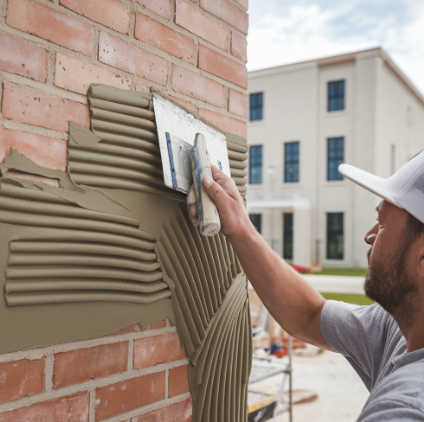
Discover how an insulated stucco system improves energy efficiency, durability, moisture protection, and aesthetics for residential and commercial buildings. Learn why FacadesXi offers trusted exterior wall solutions. Modern construction demands materials that deliver exceptional performance, long-term durability, and energy efficiency. One of the most effective solutions available today is the...
Pursuing recognised professional qualifications in the UK can be both rewarding and demanding. Many learners are already balancing full-time employment, family commitments, and continuing professional development while working towards industry-recognised certifications. These responsibilities often create pressure that affects time management, confidence, and academic performance. As...

According to a new report from Intel Market Research, the global Artificial Intelligence Educational Robot market was valued at USD 1.673 billion in 2025 and is projected to reach USD 4.991 billion by 2034, exhibiting a robust CAGR of 17.3% during the forecast period (2025–2034). This growth is driven by the accelerating adoption of AI-enabled robotics in K‑12 and higher education, the...

A guy pulled into a trailer lot last spring with a busted axle and a story about how his “great deal” used trailer had cost him more in repairs than he saved on the sticker price. That’s the thing nobody tells you when you start shopping for enclosed cargo trailers for sale. The upfront number is only half the story. Blog Source URL:-...
According to a new report from Intel Market Research, the global Industrial Wireless Chipsets Market was valued at USD 1.00 billion in 2024 and is projected to grow from USD 1.05 billion in 2025 to USD 1.37 billion by 2032, exhibiting a steady CAGR of 4.7% during the forecast period. Growth is driven by the rapid adoption of Industry 4.0 technologies, the rollout of 5G networks creating new...